18+ Volatility meaning in stocks Coin
Home » Exchange » 18+ Volatility meaning in stocks CoinYour Volatility meaning in stocks mining are ready. Volatility meaning in stocks are a trading that is most popular and liked by everyone today. You can Download the Volatility meaning in stocks files here. Find and Download all royalty-free mining.
If you’re searching for volatility meaning in stocks images information connected with to the volatility meaning in stocks interest, you have come to the ideal site. Our website frequently gives you suggestions for downloading the maximum quality video and picture content, please kindly hunt and locate more enlightening video content and images that fit your interests.
Volatility Meaning In Stocks. Investors and traders analyse a securitys volatility to assess previous price changes and forecast future moves. It is a rate at which the price of a security increases or decreases for a given set of returns. A more volatile trade has the potential for significant gains but also substantial losses. The more volatile a security is the more likely it is to go up or down in value in the short term.
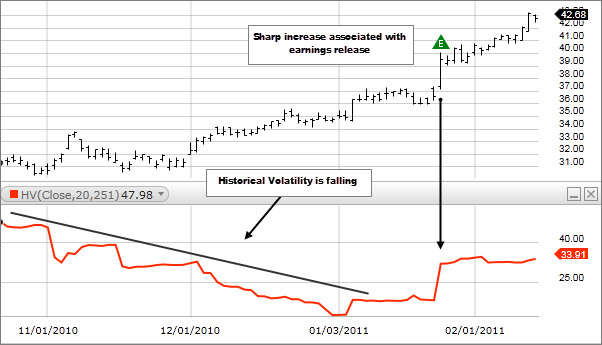 What Is Historical Volatility Fidelity From fidelity.com
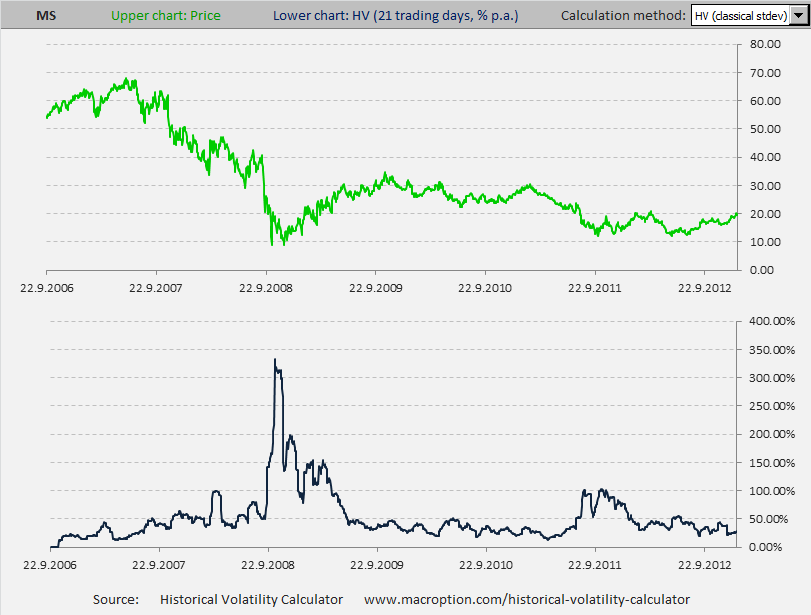
It can also be defined as a statistical measure of dispersion for particular securities and is. It can be measured against the ups and downs of the market Or it can be plotted statistically against the average price. It indicates the risk associated with the changing price of the security and is measured by calculating the standard deviation of the annualized returns over a given period of time. Volatility is measured by calculating the standard deviation of the annualized returns over a given period of time. If you used. Volatility is found by calculating the annualized standard deviation of daily change in price.
What is Stock Volatility.
How volatility is measured will affect the value of the coefficient used. If you used. Also called VIX it is a tool that investors in the stock markets use before buying or selling stocks. Malcolm Tatum Stock volatility is when stock dramatically increases or decreases within a period of time. A stock that maintains a relatively stable price has low volatility. Volatility is defined as the rate at which the price of a security increases or decreases for a given set of returns.
 Source: investopedia.com
Historic volatility measures a time series of past market prices. Market volatility is defined as a statistical measure of a stocks or other assets deviations from a set benchmark or its own average performance. If you used. Volatility is a way to describe how often and by how much the price of a security changes in the market. Volatility is a measure of the securitys stability and is usually calculated as the standard deviation derived from a continuously compounded return over a certain period of time.
 Source: lynalden.com
The higher the value the more volatile the security will be. It is one of the most key measures in quantifying risk. Stock Volatility The relative rate at which the price of a security moves up and down. Volatility refers to amount of risk related to the amount person has invested on the stock. Say higher the volatility higher the risk the price of the stock may go either high or low.
 Source: investopedia.com
Most traders associate higher volatility with downward action but it simply means wider ranges between high and low prices. Volatility is found by calculating the annualized standard deviation of daily change in price. Volatility is the measure of how much a stocks price moves. Think back to March when the SPX 500 fell 32 as. In the stock market volatility stands for the risk of change in the price of a security.
 Source: businessinsider.com
A more volatile trade has the potential for significant gains but also substantial losses. If you used. What is Volatility in the Stock Market. Experts often point to high market volatility as an indicator that a big drop and potential bear market is on the way. Volatility is a way to describe how often and by how much the price of a security changes in the market.
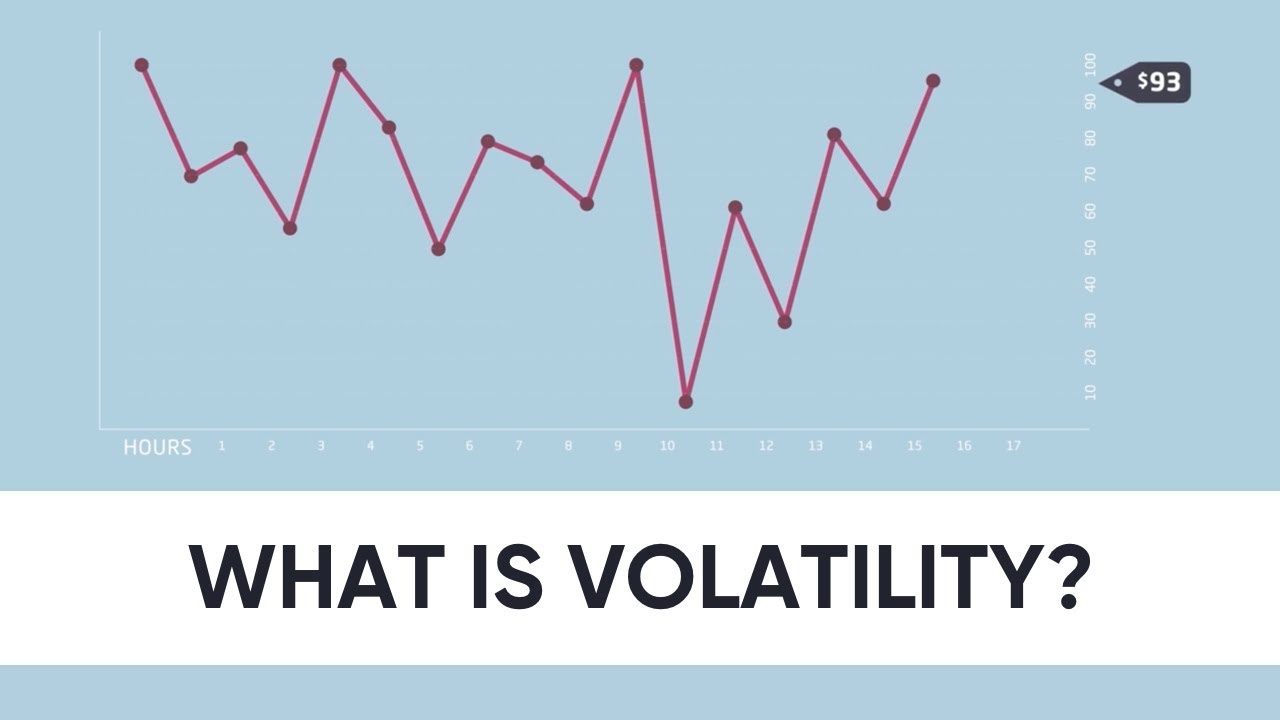 Source: youtube.com
Measuring stock volatility in percent is more common as there is one big advantage over using currency units comparability. Malcolm Tatum Stock volatility is when stock dramatically increases or decreases within a period of time. Measuring stock volatility in percent is more common as there is one big advantage over using currency units comparability. Volatility is found by calculating the annualized standard deviation of daily change in price. If volatility is high for a stock that means it could be a risky bet because of wild price swings.
 Source: ruleoneinvesting.com
Investors and traders analyse a securitys volatility to assess previous price changes and forecast future moves. Generally it is measured by calculating the standard deviation between the returns of a market index or security. It can be measured against the ups and downs of the market Or it can be plotted statistically against the average price. It is one of the most key measures in quantifying risk. Volatility is how fast the price of an investment fluctuates over time.
 Source: sciencedirect.com
Stock volatility refers to the potential for a given stock to experience a drastic decrease or increase in value within a predetermined period of timeInvestors evaluate the volatility of stock before making a decision to purchase a new stock offering buy additional shares of a stock. Volatility is defined as the rate at which the price of a security increases or decreases for a given set of returns. It is essentially an analysis of the changes in the value of a security. Volatility refers to amount of risk related to the amount person has invested on the stock. Malcolm Tatum Stock volatility is when stock dramatically increases or decreases within a period of time.
 Source: investopedia.com
And if volatility is high for the overall market get ready to swoon and not in a celebrity-sighting kind of way. Measuring stock volatility in percent is more common as there is one big advantage over using currency units comparability. A highly volatile stock is inherently riskier but that risk cuts both ways. Volatility is defined as the rate at which the price of a security increases or decreases for a given set of returns. Volatility is how fast the price of an investment fluctuates over time.
 Source: lynalden.com
Stock Volatility The relative rate at which the price of a security moves up and down. High volatility is associated with higher risk. Volatility is a way to describe how often and by how much the price of a security changes in the market. Volatility is found by calculating the annualized standard deviation of daily change in price. Stock market volatility refers to the range of price movement of a stock over time.
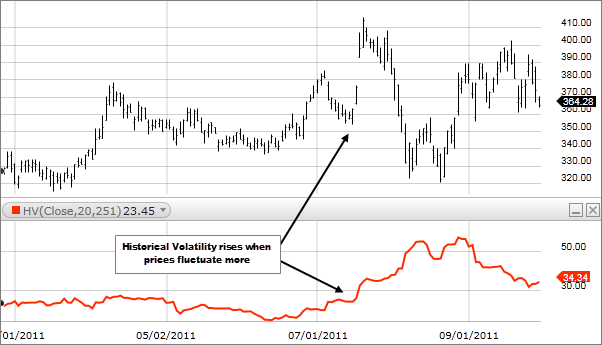 Source: fidelity.com
A more volatile trade has the potential for significant gains but also substantial losses. Investors and traders analyse a securitys volatility to assess previous price changes and forecast future moves. It is a rate at which the price of a security increases or decreases for a given set of returns. We are a risk averse group so an elevated VIX sends shivers down our spine. A stock that maintains a relatively stable price has low volatility.
 Source: capital.com
It is one of the most key measures in quantifying risk. What elevated volatility means. Measuring stock volatility in percent is more common as there is one big advantage over using currency units comparability. If volatility is high for a stock that means it could be a risky bet because of wild price swings. What is Stock Volatility.
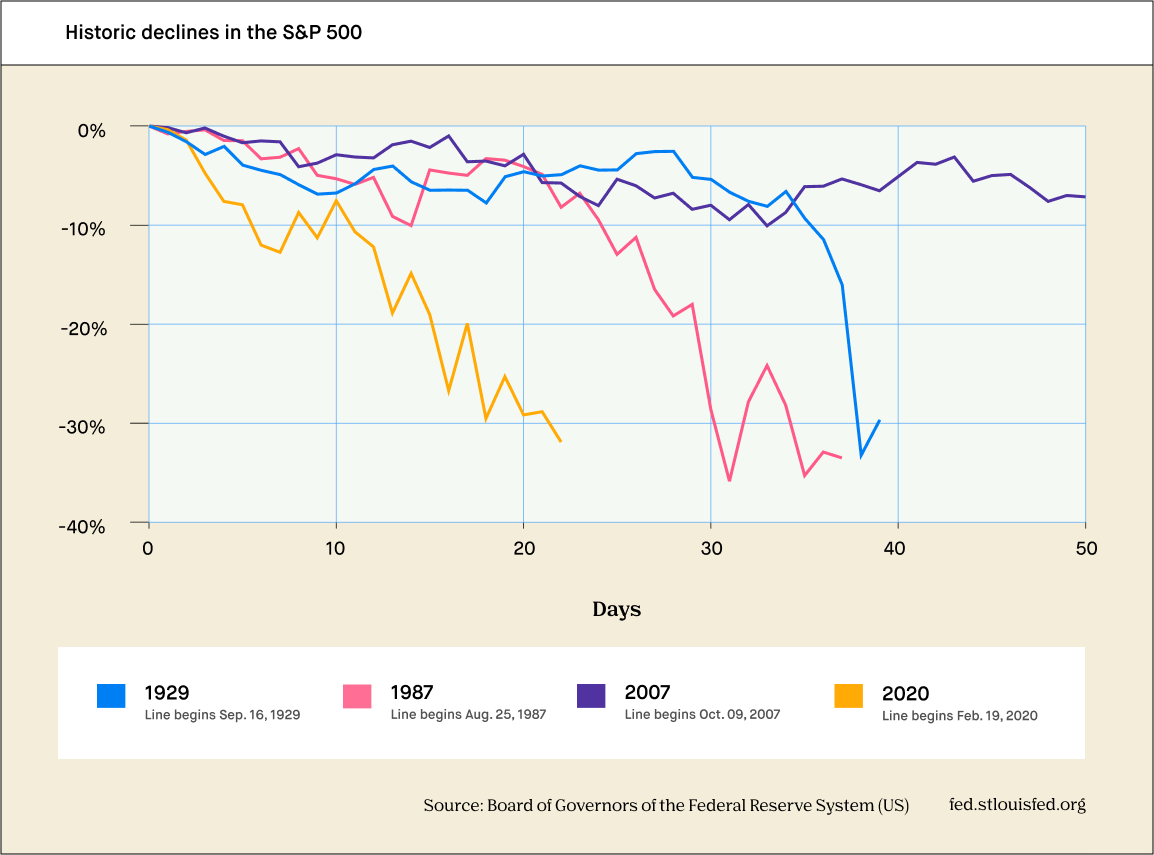 Source: learn.robinhood.com
Volatility is the measure of how much a stocks price moves. When investing in a volatile security the chance. A highly volatile stock is inherently riskier but that risk cuts both ways. Stock Volatility The relative rate at which the price of a security moves up and down. A common way to measure volatility is the beta value which has a base of 1.
 Source: macroption.com
Generally it is measured by calculating the standard deviation between the returns of a market index or security. Malcolm Tatum Stock volatility is when stock dramatically increases or decreases within a period of time. We are a risk averse group so an elevated VIX sends shivers down our spine. Loosely translated that means how likely. In finance volatility is a measurement of the fluctuations of the price of a security.
 Source: investopedia.com
It is a rate at which the price of a security increases or decreases for a given set of returns. It is one of the most key measures in quantifying risk. Volatility as expressed as a percentage coefficient within option-pricing formulas arises from daily trading activities. A measurement of historic volatility looks at a securitys past market prices. A common way to measure volatility is the beta value which has a base of 1.
 Source: study.com
A stock that maintains a relatively stable price has low volatility. The higher the value the more volatile the security will be. It expresses the degree of risk associated with a securitys price fluctuations. A stock that maintains a relatively stable price has low volatility. Say higher the volatility higher the risk the price of the stock may go either high or low.
Source: fidelity.com
Volatility stands for the risk of change in the price of a security. A measurement of historic volatility looks at a securitys past market prices. Most traders associate higher volatility with downward action but it simply means wider ranges between high and low prices. In finance volatility usually denoted by σ is the degree of variation of a trading price series over time usually measured by the standard deviation of logarithmic returns. Volatility stands for the risk of change in the price of a security.
 Source: fool.com
It is a rate at which the price of a security increases or decreases for a given set of returns. When investing in a volatile security the chance. At its most basic stock volatility is the extent to which share prices increase and decrease. Generally it is measured by calculating the standard deviation between the returns of a market index or security. A stocks volatility is equal to the amount that particular stock will separate from the original price at which it was traded.
 Source: investopedia.com
We are a risk averse group so an elevated VIX sends shivers down our spine. Say higher the volatility higher the risk the price of the stock may go either high or low. If you used. By using percentages you can directly compare their volatility more percent always means greater volatility. Volatility is measured by calculating the standard deviation of the annualized returns over a given period of time.
This site is an open community for users to do submittion their favorite wallpapers on the internet, all images or pictures in this website are for personal wallpaper use only, it is stricly prohibited to use this wallpaper for commercial purposes, if you are the author and find this image is shared without your permission, please kindly raise a DMCA report to Us.
If you find this site helpful, please support us by sharing this posts to your preference social media accounts like Facebook, Instagram and so on or you can also bookmark this blog page with the title volatility meaning in stocks by using Ctrl + D for devices a laptop with a Windows operating system or Command + D for laptops with an Apple operating system. If you use a smartphone, you can also use the drawer menu of the browser you are using. Whether it’s a Windows, Mac, iOS or Android operating system, you will still be able to bookmark this website.
